Loading...
Serving Soledad, CA and surrounding areas. (831) 315-4388
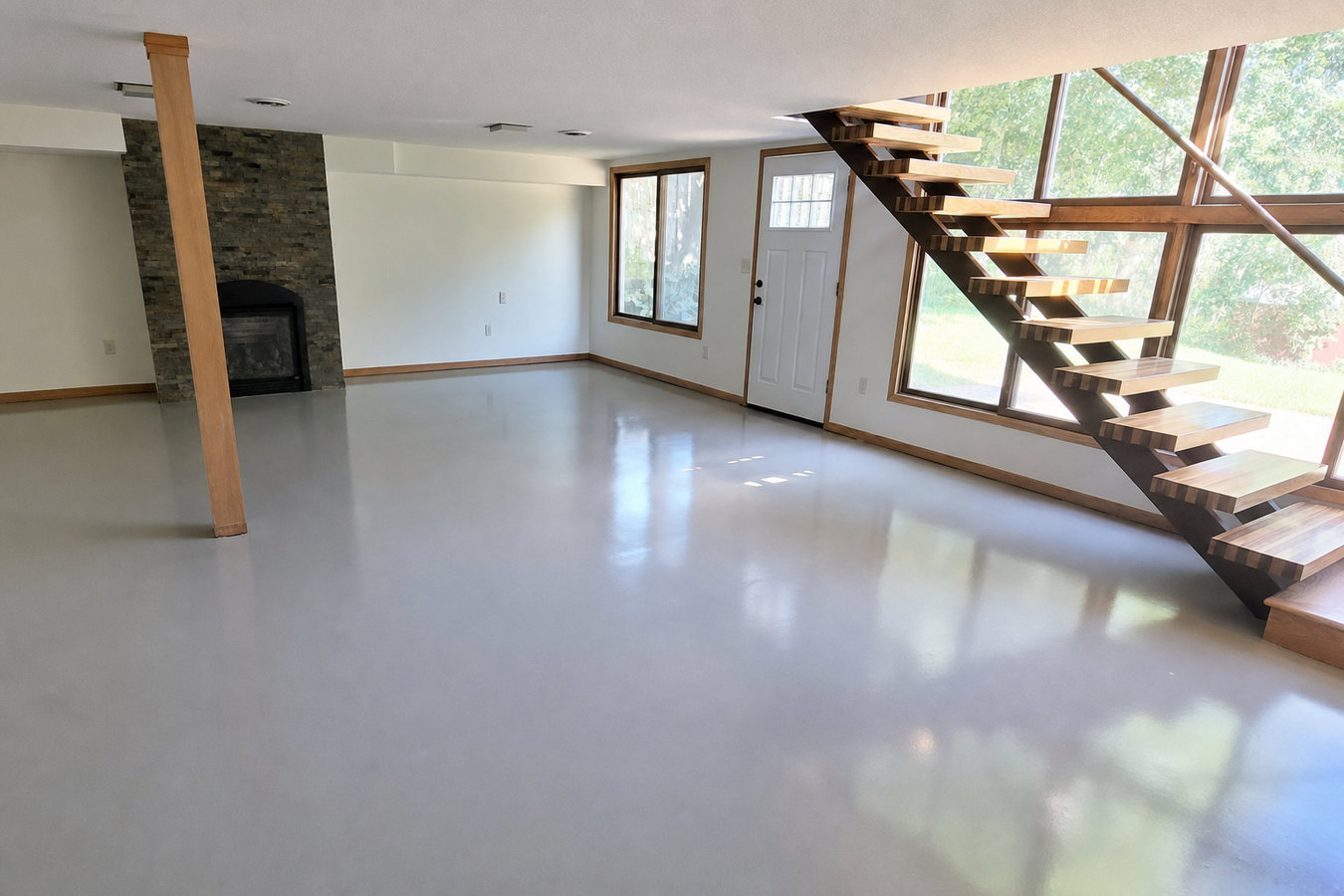
A bare concrete basement floor is not a finished floor. We assess your slab, address moisture if it is there, and apply the right system - whether that is a simple sealer or a full epoxy coating.
Basement flooring in Soledad means taking an existing concrete slab - often bare, stained, or painted - and applying a protective or decorative system that holds up to the way the space is actually used. That might be a penetrating sealer for a simple storage area, an epoxy chip coating for a home gym, or a full resurface for a basement being converted into a finished room.
The part most homeowners do not know about is moisture. Soledad winters bring steady rainfall, and even in the dry months, groundwater can move up through a concrete slab from below. Installing any coating over a slab with active vapor transmission - without testing and addressing it first - usually results in bubbling or peeling within a year or two. That is not a material problem, it is a prep problem, and it is entirely preventable with the right process upfront. Homeowners adding a decorative element to the rest of their home sometimes pair basement flooring with terrazzo flooring for the main living areas, keeping basement surfaces practical while upgrading what guests see.
If your basement floor leaves white or gray dust on anything that sits on it, the surface is deteriorating. This is called concrete dusting, and it happens when the surface layer breaks down from age, traffic, or chemical exposure. A penetrating sealer or thin overlay stabilizes the surface and stops the problem - ignoring it usually means the slab gets worse faster.
Oil, rust, and mineral stains from hard water or old equipment are common in Soledad basements that have housed farm equipment, water softeners, or irrigation systems. Regular cleaning does not remove them because they have penetrated into the concrete. A proper prep process - including mechanical grinding where necessary - removes the contaminated surface layer before the new coating goes down.
Soledad homeowners who want to add a gym, workshop, laundry room, or living space in their basement quickly realize the bare concrete is not acceptable for a room people spend time in. An epoxy chip coating gives the floor color, texture, and a surface that is easy to sweep and mop - without the cost of tiling a large space.
If a previous coating has peeled, that almost always means the slab had moisture present and was not addressed before the coating was applied. Recoating over the same slab without fixing the root cause produces the same result. We grind off the failed material, test for vapor transmission, apply a moisture vapor barrier if needed, then install the new coating correctly.
Not every basement floor needs the same solution. A utility room that holds a hot water heater and some storage boxes has different requirements than a basement gym used daily by two adults and a dog. We match the system to the space. Every project starts with an in-person assessment that includes moisture testing and a visual inspection for cracks, spalling, and old coatings before we recommend anything. If your basement floor needs significant prep work, concrete grinding and surface preparation is handled as part of the same project. If your primary goal is protecting a bare slab from moisture and staining without changing its look, concrete sealing may be a more cost-effective starting point - we assess both spaces together to make sure the right system is matched to the actual conditions.
Best for utility basements and storage areas. Protects the slab from moisture and staining without changing the look much. Lower cost, straightforward application, effective for most basements not used as living space.
A solid-color or chip broadcast coating that creates a hard, cleanable surface with real durability. Best for gyms, workshops, and any basement where the floor takes daily wear. Available in a range of colors.
Colored vinyl chips broadcast into the epoxy base layer create a textured, slip-resistant surface that also hides minor imperfections in the concrete. Popular for finished basement spaces and home gyms.
A thin layer of cementitious material applied over the existing slab to repair spalling, level uneven sections, or create a fresh surface for a basement being converted into a finished room.
Soledad sits in the Salinas Valley between the Gabilan and Santa Lucia ranges, and the soil conditions here affect basement slabs in ways that are worth knowing before you choose a coating system. Clay-heavy soils common throughout the valley retain moisture and can apply upward pressure on slabs during wet winter months. Combined with the wide temperature swings between summer highs and cool nights, Soledad concrete slabs see more stress across the seasons than slabs in more moderate coastal areas.
Homes built in the 1960s and 1970s - a significant share of Soledad's housing stock - often have slabs poured without a vapor barrier underneath. That design was common practice at the time and does not mean the slab is defective, but it does mean moisture testing before any coating is applied is especially important. We work with homeowners across the Salinas Valley including King City and Gonzales. The Concrete Network offers a useful guide to understanding different floor coating systems if you want to research options before your estimate.
Tell us roughly how large the space is and how you use it - or plan to use it. We get back to you within one business day. No phone quotes - an accurate number requires seeing the slab.
We inspect the slab for cracks, old coatings, staining, and spalling, then test for vapor transmission. This step determines which system will bond correctly and how much prep work is needed. You get a written estimate with line items for labor, materials, and prep separately.
We grind or shot-blast the surface to open the pores of the concrete, remove old paint or failed coatings, fill cracks, and apply a moisture vapor barrier if the test results call for it. This is the most important stage - the performance of the finished coating depends on the quality of the prep.
The coating system goes down in layers - primer, base coat, broadcast layer if applicable, then topcoat. Cure times vary by product and temperature; we advise you on when the floor is ready for foot traffic and when it is safe for heavy equipment or vehicles. We do a final walkthrough before we leave.
No obligation, no pressure - just an honest assessment of what your slab needs and a written quote you can rely on.
(831) 315-4388We test vapor transmission on your slab before we recommend any coating system. This single step prevents the most common way basement floor jobs fail - coating over active moisture and watching it peel six months later.
Diamond grinding or shot-blasting opens the concrete properly so coatings bond at the molecular level. Acid etching alone does not create adequate profile on older Soledad slabs, and contractors who skip mechanical prep produce shorter-lasting results.
Not every basement needs an expensive coating. If a penetrating sealer is the right answer for your utility room, that is what we will recommend - not an upgrade that adds cost without adding value for your specific situation.
Your quote breaks down labor, materials, and any prep or repair work separately. No bundled numbers, no surprise additions at completion. The price you approve is the price you pay.
A properly done basement flooring job lasts for years without attention. Done incorrectly, it peels and requires redoing within a season. The difference is almost always in the prep - and that is where we focus our time on every project.
Epoxy and polyurea coatings for garages, driveways, and utility spaces - the same prep-first approach applied to surfaces beyond the basement.
Learn MoreA permanent decorative flooring system using aggregates in cement or resin - a long-lasting upgrade for main living areas.
Learn MoreWe work around your schedule and respond within one business day. Call or fill out the contact form to get started.